The Wrong Funeral
Agents are not killing agility. They are killing the ceremony, and making the thing it protected more valuable than ever.
Agents are not killing agility. They are killing the ceremony, and making the thing it protected more valuable than ever.
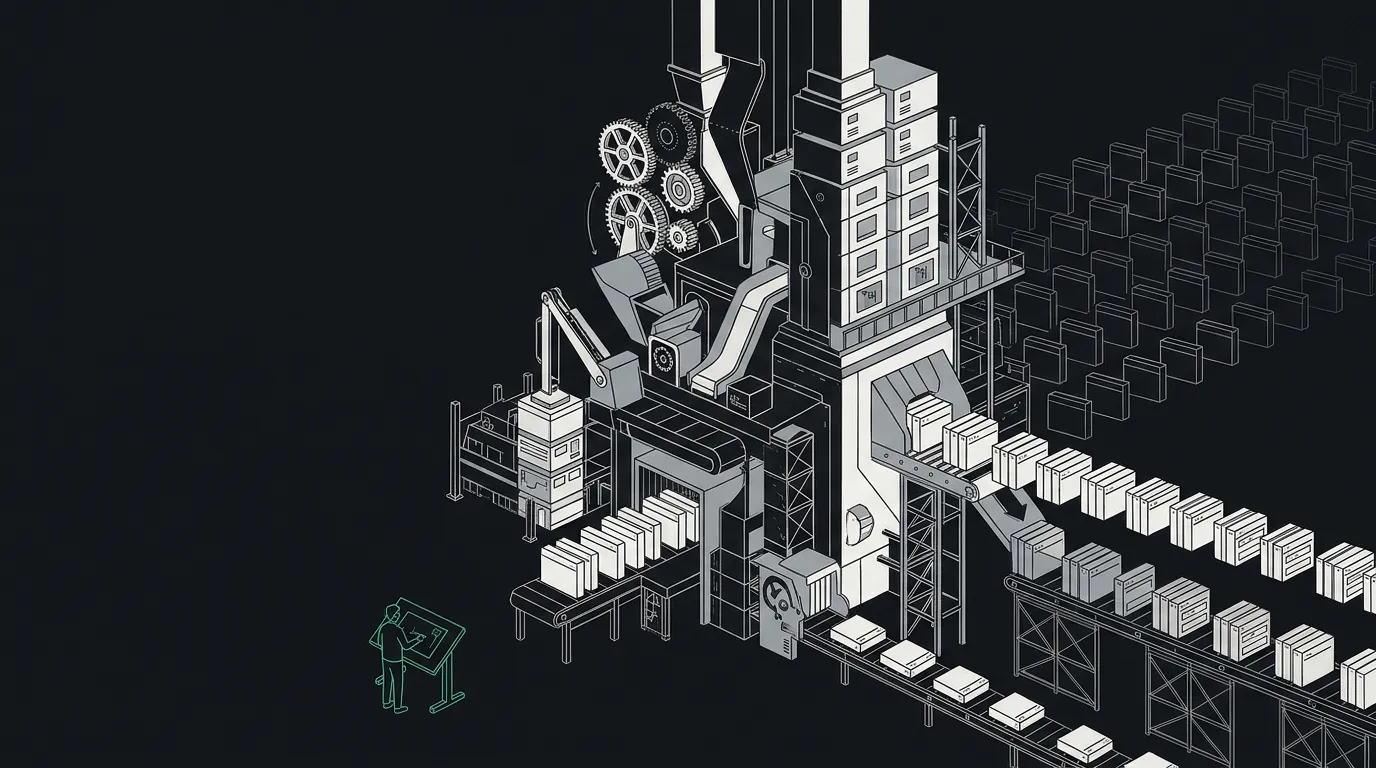
I spent Monday at the Digitale Leute Summit in Cologne, the AI deep-dive day, and the whole room had moved on from the question the internet is still arguing about. Nobody on stage asked whether AI killed Agile. They were building what comes after it. Talk after talk circled the same idea, the “software factory,” and my own note at the end of the day was blunt. The field is pivoting from feature engineering to factory engineering. More product, less tech.
Meanwhile the funeral for Agile rolls on, and the mourners are at the wrong grave.
Every few weeks another post declares it dead. In February, Steve Jones, an EVP at Capgemini, wrote that AI had killed the Agile Manifesto outright. Agentic development, he says, is “too fast for Agile.” When an agent builds a working application in an afternoon, the two-week sprint looks like a horse-drawn cart on a motorway. He is right about that. He is standing at the wrong grave.
The confusion is that two different things wear the same name.
Two things called Agile
One is Agile the method, which in most companies means Scrum. Two-week sprints, story points, velocity charts, backlog grooming, phased delivery. Scrum’s ceremonies, with a specific shape.
The other is agility the property. The ability to sense a change and adapt to it. The Agile Manifesto put this first among its four values in 2001, “Responding to change over following a plan.”
The method exists because of one fact about the old world. Change was expensive. Rewriting a module cost days of work. Shipping cost a release train. So teams built machinery to manage that expense, to estimate it, batch it into sprints, sequence it, and protect people from thrash. Every ceremony that gets complained about today is a response to change being costly.
AI attacks the fact underneath. When an agent rewrites the module in minutes, the expense the machinery was built to manage is mostly gone. The machinery looks absurd. But the value it was serving, the ability to adapt, does not go away. It gets cheaper to act on, which makes it the thing that separates teams.
That is the whole argument. The ceremony is dying. The value is winning. Burying them together is the mistake.
The factory, not the feature
The summit crowd understood what the “Agile is dead” posts miss. When building gets cheap, you do not stop engineering. You move up a level and build the thing that builds.
That is the software factory. The Cologne consultancy hackers & wizards define it cleanly: “the delivery system that produces software changes. It takes intent, turns it into bounded work, gives agents the context and environment they need to execute, and accepts their output only after defined checks. People decide what should exist, own the constraints, and remain accountable for what runs in production.” Their instruction to teams is the line I keep thinking about. Do not build the features. Build the factory that builds them. The human builds the factory, not the software.
In practice it chains agent steps from a raw issue to a merged pull request, ideate, refine, challenge, implement, review, rework, on fixed foundations of tooling, context, and guardrails. Lars Grammel runs the same pattern at Vercel on their open-source AI SDK, where a thousand-plus open issues had stacked up against a sprawl of providers, frameworks, and runtimes. An agent classifies each incoming issue, other agents reproduce and fix and review, a human merges, and the factory backports the change. On Vercel’s own repo it was closing a large share of weekly issues within four weeks, though with no baseline behind the number, so read it as a direction. His closing slide did not hedge. Factory engineering is the new software engineering.
Look at what survives this move and what dies. The fixed two-week sprint dies, it is a batch size chosen for human typing speed, and when a change ships in an afternoon, batching it into a fortnight adds latency, not safety. Story-point estimation dies, it existed because building was the costly, uncertain step, and that is no longer where the uncertainty lives. What survives is the discipline, and it survives in a harder form. Every speaker in Cologne landed on the same three rules. Measure before you automate. Automate selectively by risk, a docs change gets a light review, user-facing code gets a deep one. And fix the workflow, never the result, a bad PR is a defect in the factory, so the fix goes back into the prompts and tests and context and the factory learns. Kent Beck, who signed the original Manifesto, calls his version of this “augmented coding,” keep the clean code and the tests, let AI do the typing. The ceremony can go. The discipline cannot.
The weight moves to product
Build a factory and you quickly find the factory is not the bottleneck either. Something upstream is.
The warning came from the hackers & wizards talk, and it is the sharpest thing I heard all day. Agents build faster than product can decide. Questions pile up with the product managers, and the business gets half-finished work and rework. So they are inventing a new role, a “factory engineer” who splits time between shipping features and improving the machine that ships them.
Marty Cagan reached the same place from the product side. “Today, because the cost of delivery has dropped so dramatically, actually building the feature or project is no longer the bottleneck.” And then the turn, “the real bottleneck is in discovering a solution that’s worth building.” His measure of how cheap exploration got is blunt. “10-20 prototypes per week is easy for just about anyone.” When you can build almost anything in an afternoon, “can we build it?” stops gating anything. “Should we, and did it work?” is the only question left that costs something, and that question is judgment.
The other Cologne talk, “The rise of Product Engineering,” drew the org chart that follows. Smaller teams. More product people than before. Teams structured around customer outcomes end to end, with deep domain expertise as the thing that pays out. More product, less tech, as my note put it. That is why agile sharpens rather than dies when agents make everything buildable. Its whole point was never to build fast, it was to avoid building the wrong thing, and that is now the only job left.
The same move happens one level up. Gartner’s 2026 CIO agenda pushes the shift from “calendar-based to trigger-based decision-making.” Deloitte’s 2026 human-capital work ranks adaptive capability its second-biggest trend, with 85% calling it critical and only 27% saying they manage change well. The annual plan was a batching mechanism for expensive change, the same as the sprint, and its economics are going the same way.
The trap
The optimistic version of this story has a failure mode, and hackers & wizards named it. The velocity trap. Agents can make every coding session shorter while cycle time, delivery metrics, and the backlog stay exactly where they were. A statistic from the Stack Overflow 2025 survey captures it, 69% of developers using agents say they feel more productive, but only 17% say agents helped their team work better together. Individual speed up, system flat.
That gap is the whole risk. Writing code got cheap. Reviewing it, integrating it, and owning it did not. Grammel had a slide that just said it, “human review is the bottleneck,” with how deep the review goes set by how risky the change is. Cheap building with slow feedback and no product judgment is the worst outcome, not the best, you build the wrong thing at scale and then you own it forever. Every feature an agent produces in a minute is a feature someone maintains, secures, and pays for for years.
Agility was never about build speed. It is about how fast the whole loop turns. Decide, build, learn, decide again. Agents made one leg of that loop almost free. The slow legs now are the deciding and the learning, which is to say the parts that were always the point. Agile is not dying. It is finally being asked to do the only job it was ever for.
Sources
Field notes from the Digitale Leute Summit 2026 (AI Deep Dive Day, Cologne, 17 November 2026), with talks by hackers & wizards, Lars Grammel of Vercel, and Jan Hegewald and Stefan Vosskötter on “The rise of Product Engineering.” The software-factory definition is from hackers & wizards (Benedikt Stemmildt, “What is a Software Factory?”, July 2026) and their /factory/ model, which also cites the Stack Overflow 2025 developer survey; Grammel’s slides are at ai-sdk-factory-presentation.vercel.app. Treat the closure rate and survey figures as vendor and own-repo numbers, not controlled studies. The debate frame is InfoQ’s February 2026 “Does AI Make the Agile Manifesto Obsolete?” (Steef-Jan Wiggers), collecting Steve Jones (blog.metamirror.io), Kent Beck’s “augmented coding” (newsletter.kentbeck.com), and AWS’s guidance that “planning becomes intent design” (which AWS calls a natural evolution of Agile, not a rejection). The product argument is Marty Cagan’s “Build to Learn vs Build to Earn” and its FAQ (svpg.com, April 2026). On organisational agility, Gartner’s CIO Agenda 2026 and Deloitte’s 2026 Global Human Capital Trends. The founding text is the Agile Manifesto (2001).
The Parking Brake
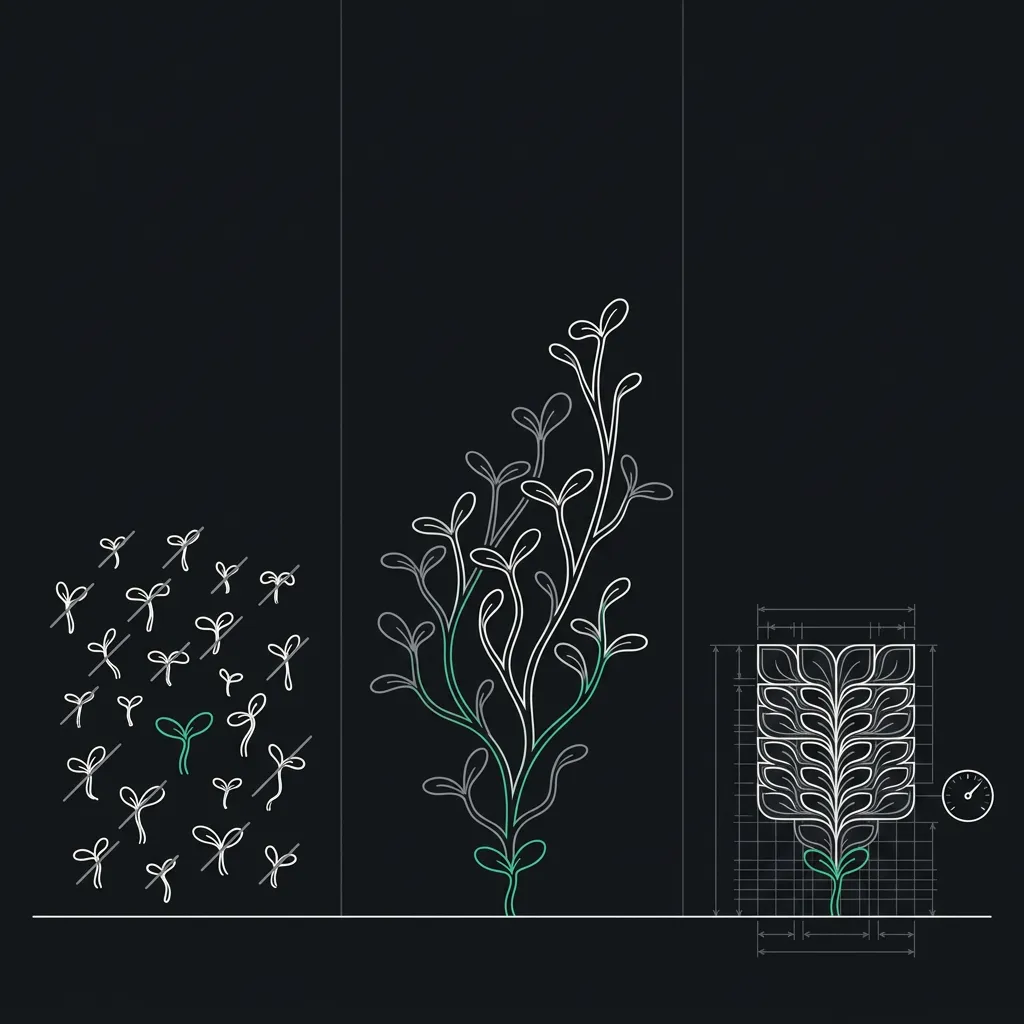
Kent Beck's 3X model, and why cleaning up too early is a phase mistake most engineering orgs make.
modularThinkin now on Astro and AWS Amplify
simplify... focus on what is important
Code Kata oder "Auftragen ... Polieren" für Geeks
Gelesen habe ich über das Thema Code Kata in dem Buch von Roman Pilcher "Agile Entwicklungspraktiken mit Scrum", welches einen guten Überblick über den…